










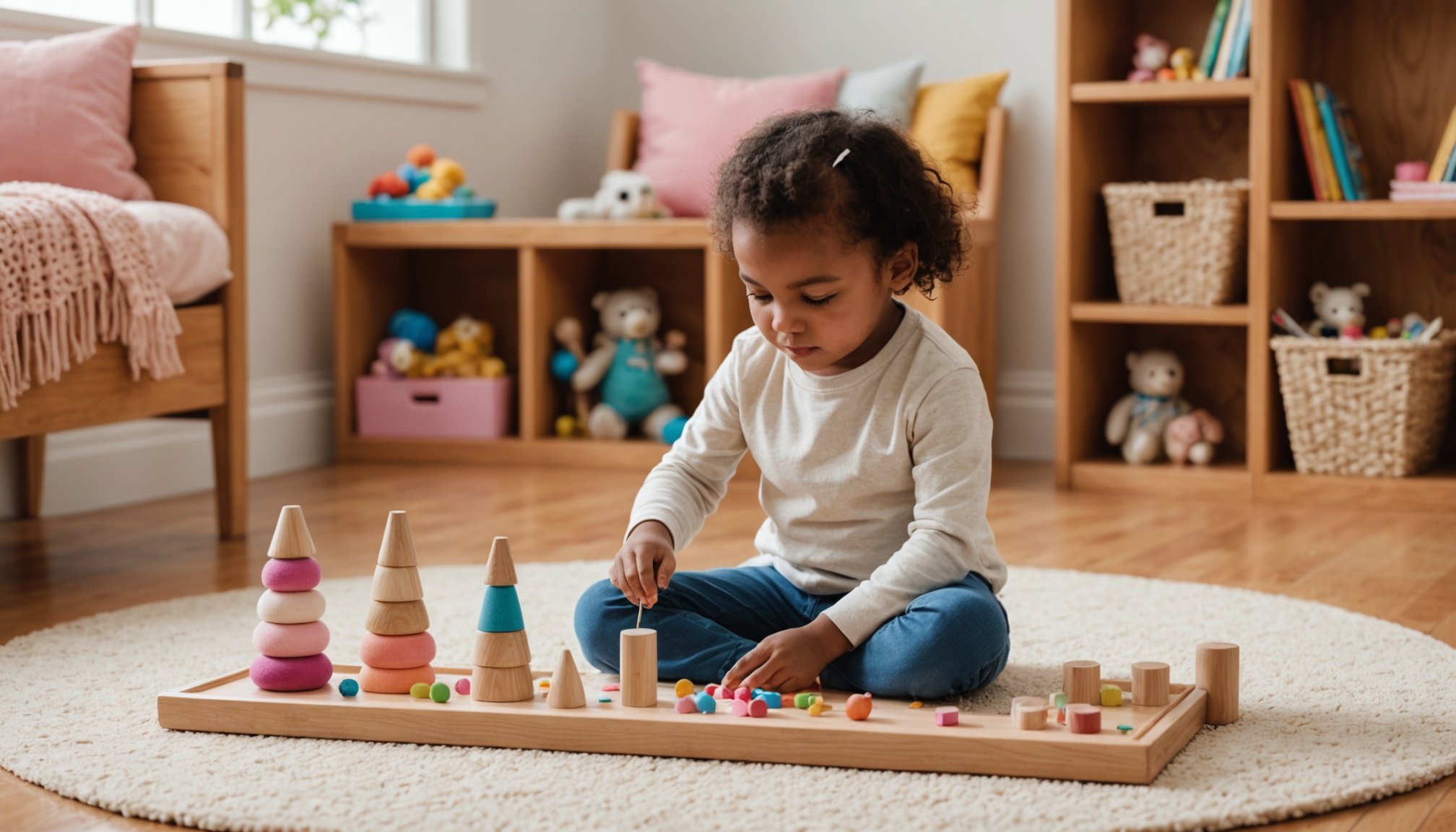
Bringing Montessori learning into your home creates a nurturing environment where children develop independence and creativity naturally. According to recent educational research from, children who engage with authentic Montessori materials at home show 40% greater problem-solving abilities compared to traditional toy users. The beauty of Montessori toys lies in their ability to foster self-directed learning while building essential life skills. From wooden puzzles that enhance fine motor development to practical life activities that encourage responsibility, these carefully designed materials support your child’s natural curiosity.
Why These Educational Materials Transform Your Child’s Development ?
The Montessori approach revolutionizes how children learn by honoring their natural curiosity and developmental rhythms. Unlike traditional educational methods that impose structure from the outside, Montessori materials invite children to explore, discover, and master skills at their own pace through hands-on experiences.
Also read : Can You Use British Royal Fashion Icons as Inspiration for Everyday Style?
At the heart of this philosophy lies the principle of prepared independence. When children can pour water without spilling, button their clothes, or sort objects by color and texture, they build genuine confidence that extends far beyond the immediate task. These seemingly simple activities develop fine motor skills, concentration, and problem-solving abilities that form the foundation for future academic success.
Modern parents often worry about excessive screen time and passive entertainment dominating their child’s day. Montessori materials offer a refreshing alternative that engages all the senses. Children touch smooth wooden blocks, hear the gentle sound of beads moving, and see colors that naturally attract their attention. This multi-sensory engagement creates deeper neural pathways and more meaningful learning experiences than digital alternatives can provide.
This might interest you : What Is the Best Approach to Pairing Wide Belts with Different Types of Dresses?
The beauty of authentic Montessori education lies in its respect for the child as a capable learner, fostering intrinsic motivation that will serve them throughout their educational journey. How wonderful would it feel to watch your little one confidently tackle new challenges with the right educational tools from www.montessori-kingdom.com ?
Age-Appropriate Selection Guide: From Baby to School Years
Choosing the right Montessori toys for your child becomes effortless when you understand what sparks their development at each stage. Every age brings new capabilities and curiosities that specific materials can nurture beautifully.
Here’s your mother-to-mother guide for selecting toys that will truly engage your little one:
- 0-6 months: Black and white cards stimulate developing vision, while wooden rattles provide safe sensory exploration. Mobiles with simple geometric shapes encourage focus and tracking skills during those precious calm moments.
- 6-12 months: Object permanence boxes teach cause and effect, while large wooden rings support grasping reflexes. Soft fabric books introduce textures and early language concepts through gentle interaction.
- 1-3 years: Shape sorters develop problem-solving abilities, and practical life tools like child-sized pitchers encourage independence. Wooden puzzles with knobs strengthen fine motor skills while building concentration.
- 3-6 years: Color tablets refine visual discrimination, while sandpaper letters introduce writing preparation through touch. Threading activities and small manipulatives prepare hands for future academic tasks with engaging precision work.
Remember, the best Montessori toy is one that matches your child’s current interests and developmental window.
Creating Your Home Learning Environment with These Tools
Transforming your living space into a Montessori learning environment doesn’t require a complete home makeover. The key lies in creating accessible spaces where your child can independently explore and engage with their materials. Start by designating low shelves at your child’s eye level, making everything within their reach and fostering that crucial sense of autonomy.
The magic happens through thoughtful toy rotation. Instead of overwhelming your little one with countless options, curate a selection of 6-8 materials and swap them weekly. Store the rest in labeled bins, creating anticipation and renewed interest when familiar toys reappear. This approach not only maintains your child’s focus but also keeps your home organized and clutter-free.
Integration into family life feels natural when you involve your child in daily routines. Place child-sized utensils in the kitchen, create a dedicated art station near the dining area, and establish quiet corners for focused activities. Remember, your Montessori environment should evolve with your child’s growing independence, adapting to their changing needs while maintaining that essential connection between learning and everyday life.
Quality vs Budget: Making Smart Investment Choices
Navigating the world of Montessori toys as a mother often feels like walking a financial tightrope. You want the best for your child’s development, but quality educational materials can stretch the family budget. The key lies in understanding what truly matters for your child’s learning journey.
When evaluating Montessori toys, focus on materials that will grow with your child rather than age-specific items. A well-crafted wooden puzzle or sensory basket can engage a toddler for months, then be rediscovered with new purpose as they develop. This developmental longevity transforms a higher upfront cost into genuine value over time.
Consider the sibling factor in your investment decisions. Quality Montessori materials are designed to withstand years of exploration by multiple children. That beautiful wooden sorting toy your two-year-old adores today will likely captivate their younger sibling in a few years, making it a family investment rather than a single-child purchase.
Remember that the most expensive option isn’t always the wisest choice. Look for toys that meet Montessori principles of natural materials, purposeful design, and child-sized proportions. Sometimes a thoughtfully chosen mid-range option provides better educational value than premium alternatives that prioritize aesthetics over functionality.
Supporting Creative Independence Through Purposeful Play
The most magical moments in parenting often happen when we step back and simply watch. Your child’s natural curiosity drives learning far more effectively than any structured lesson ever could. By creating space for independent exploration, you’re building the foundation for lifelong creativity and problem-solving skills.
Resist the urge to immediately help when your toddler struggles with a puzzle or building block. Those moments of gentle frustration are building resilience and critical thinking. Instead, offer encouraging words from nearby: “I see you’re working hard on that” or “You’re really focusing.” This validates their effort without taking away their accomplishment.
When your child makes a discovery—whether it’s how two shapes fit together or that water flows downhill—celebrate their observation with genuine enthusiasm. “You figured out that all by yourself!” reinforces their confidence as an independent learner. These small victories accumulate into a strong sense of self-efficacy that will serve them throughout life.
Trust your instincts as a mother. You know when to observe quietly and when gentle guidance is needed. This balance creates the perfect environment for your child’s natural creativity to flourish.
Your Questions About Montessori Home Learning
What are the best Montessori toys for toddlers at home?
Focus on practical life materials like wooden puzzles, sorting trays, and stacking toys. Choose items that encourage independence and real-world skills development.
How do I choose authentic Montessori materials for my child?
Look for natural materials, simple designs, and toys that isolate one skill. Authentic materials are self-correcting and allow children to discover mistakes independently.
What age should I start introducing Montessori toys to my baby?
Begin around 3 months with simple grasping toys and mobiles. Introduce more complex materials as your child shows readiness and interest in new challenges.
Are expensive Montessori toys worth the investment for home learning?
Quality matters more than price. Well-made toys last longer and provide better learning experiences. Consider starting with essential items and building gradually.
How can I create a Montessori learning environment with the right toys?
Organize materials on low shelves, rotate toys regularly, and choose a few quality items over many. Create dedicated spaces for different activities and learning areas.